Hospital Safety Standards for International Patients in India (2026 Update)
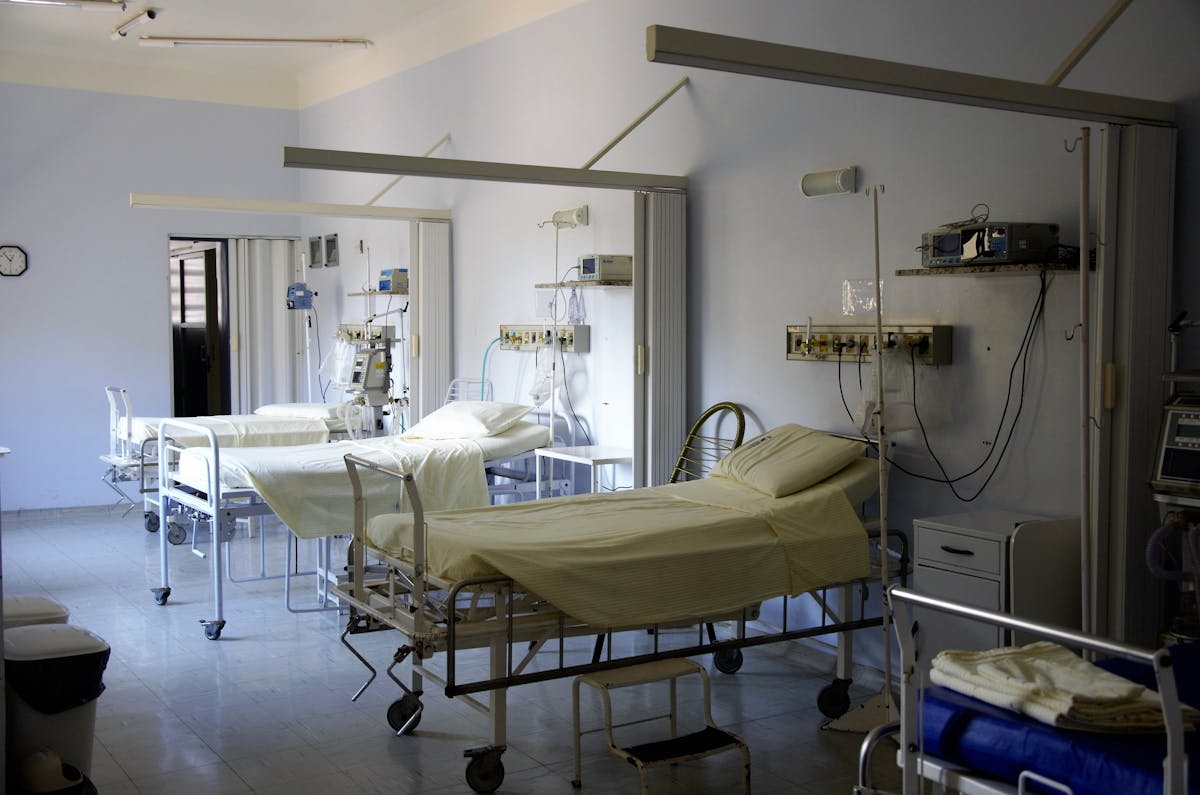
What NABH, JCI, and the 2026 fire safety and medical-tourism safety guideline updates mean for international patients verifying hospital safety before travel to India.
If you are weighing whether to travel to India for medical care, hospital safety is usually the first question that matters. It comes before the choice of doctor, before the choice of city, and often before the cost conversation. This 2026 update walks through the safety frameworks that apply to Indian hospitals, what changed this year, and what international patients can verify before they share medical reports.
This guide is informational. It does not assess any specific hospital's compliance, and it is not a substitute for the medical evaluation your treating specialist will provide. Where Livance can help is in coordinating the right questions to the right hospital, so you can travel with the answers in hand.
Why hospital safety is the first question international patients ask in 2026
International patients researching treatment in India in 2026 are arriving at the conversation more informed than in previous years. Insurance teams, embassy desks, and corporate medical-travel programmes are all asking for accreditation paperwork, fire safety clearances, and patient-rights documentation before they sign off on referrals.
Three updates in India in 2026 have raised the floor of what international patients can reasonably expect to verify.
What changed in 2026 that prompted this update
- The Union Health Ministry revised its hospital fire safety guidelines in early June 2026, tightening minimum compliance expectations across public and private hospitals.
- The Delhi Lieutenant Governor's office launched a month-long fire safety audit campaign across hospitals in the National Capital Region, running through June and into early July 2026.
- The India Medical Tourism Safety Guidelines were published on 2026-06-06 as a public-sector reference document outlining what international patients should be able to verify when planning treatment in India.
Each update is independently useful. Taken together, they signal that the question of "is treatment in India safe" can now be answered with reference to current 2026 documentation rather than older benchmarks.
Who this guide is for
This guide is written for international patients who are pre-decision: you have heard that India is a credible medical-travel destination, you are exploring options, and you want to verify safety standards before you share reports with any hospital. If you are travelling with a family member, or researching on behalf of a parent or child, this guide is also for you.
The four safety frameworks that apply to Indian hospitals
Indian hospitals operate under a layered set of accreditation and regulatory frameworks. International patients do not need to memorise these, but it helps to know what each framework covers so you can ask the hospital for the right document.
NABH (National Accreditation Board for Hospitals)
NABH is India's national hospital accreditation body, run under the Quality Council of India. NABH accreditation covers patient rights, infection control, medication management, surgical safety, emergency preparedness, and continuous quality improvement. NABH is widely held by mid-sized and large Indian hospitals and is the most common Indian-domestic safety credential.
Accreditation status should be confirmed for each hospital. NABH publishes its accredited-hospital list on its public website, and hospitals typically share the accreditation certificate on request.
JCI (Joint Commission International)
JCI is an international hospital accreditation administered by the Joint Commission, a US-based standards body. JCI accreditation is recognised more widely by international insurers and corporate medical-travel programmes than NABH alone. JCI covers many of the same patient-safety domains as NABH, with additional emphasis on consistent care across borders.
A number of larger Indian hospitals hold both NABH and JCI accreditation. International patients should confirm accreditation status hospital by hospital, since accreditation can lapse or be renewed at different intervals.
National Health Mission patient safety guidelines
The National Health Mission and the Directorate General of Health Services publish patient safety guidance that applies broadly across Indian hospitals, including infection prevention, blood transfusion safety, and adverse event reporting. These guidelines are part of the regulatory baseline that all hospitals are expected to meet, irrespective of accreditation.
Hospital fire safety norms updated by the Union Health Ministry in 2026
The Union Health Ministry's revised fire safety guidelines published in early June 2026 update the minimum expectations for fire safety infrastructure, evacuation drills, fire NOC renewals, and staff training in hospitals. Fire safety has been a recurring concern in Indian hospitals over the last decade, and the 2026 update is the most substantial revision in several years.
International patients can ask any hospital for the date of its most recent fire safety NOC and the date of the last internal fire drill. These are reasonable, verifiable questions.
India Medical Tourism Safety Guidelines (June 2026)
The India Medical Tourism Safety Guidelines, published 2026-06-06, are a public-sector document outlining safety expectations specifically for hospitals treating international patients. The guidelines are an important reference because they bridge two worlds: the domestic hospital safety regime (NABH, fire safety, patient rights) and the expectations international patients arrive with from their home health systems.
What the new guidelines cover
The guidelines address:
- Accreditation expectations for hospitals offering medical-tourism services.
- Pre-arrival coordination, including how medical reports are shared and reviewed.
- Infection control expectations, particularly for surgical and transplant units.
- Patient rights, grievance handling, and the language in which patient information is provided.
- Post-treatment follow-up expectations.
The guidelines are not a one-time certification. They are a reference framework that hospitals can be asked to operate against.
What they mean for international patients planning travel
If you are planning treatment in India in 2026, you can reasonably ask a hospital, "Do you operate in line with the India Medical Tourism Safety Guidelines published in June 2026?" A credible hospital will answer with specifics, not a vague yes. If a hospital cannot answer, that itself is information.
Delhi LG fire safety audit (June 2026) and what it signals
The Delhi Lieutenant Governor's office began a month-long fire safety audit campaign across hospitals in the National Capital Region in June 2026, with the audit window extending into early July. The campaign is examining fire safety clearances, evacuation infrastructure, and staff readiness across both public and private hospitals.
Scope of the audit
The audit applies to hospitals operating within the Delhi NCR. Results from the audit are expected to be published in stages, and hospitals identified as non-compliant will be given a window to remediate.
How international patients can interpret the findings
For international patients, the audit is useful in two ways. First, hospitals that complete the audit will have current, verifiable fire safety paperwork. Second, hospitals can be asked, "Has your hospital been audited under the June 2026 Delhi LG fire safety campaign, and can you share the result?" If you are planning treatment outside Delhi, you can still use the audit as a reference frame and ask the equivalent question of your hospital's state fire service NOC.
How international patients can verify a hospital's safety standing before travel
You do not need to be an auditor. You need to ask five questions and get clear answers.
Check accreditation status directly
Ask the hospital to share its current NABH and JCI accreditation certificates, with the issue and expiry dates. Confirm the certificates by name against the accrediting body's public list where possible.
Ask for the hospital's last fire safety NOC date
Request the date of the most recent fire safety NOC issued by the state fire service, and the date of the last internal fire drill. Both are routine documents in a compliant hospital.
Confirm infection control and ICU protocols
Ask the hospital to describe its infection control programme and ICU protocols at a high level. You are not asking for a clinical lecture; you are checking whether the answer is structured and confident, or vague.
Confirm patient grievance and emergency escalation paths
Ask, "If something goes wrong during my stay, who do I escalate to, and how quickly?" A credible hospital has a named patient relations team, a documented grievance path, and a clear answer.
Confirm medical record handling and data privacy
Ask how your medical reports will be stored, who will have access, and how the hospital handles records under Indian data-protection law. International patients have the right to ask this question, and Indian hospitals are increasingly used to answering it.
Eight questions to ask before sharing your medical reports
You can copy this list and share it with any hospital or medical-travel facilitator. The goal is to surface clear answers before, not after, your reports leave your inbox.
- What accreditations does your hospital currently hold, and when were they last renewed?
- What is the date of your most recent fire safety NOC?
- Does your hospital operate in line with the India Medical Tourism Safety Guidelines (June 2026)?
- Who is the named specialist who will review my reports, and what is their experience with my condition?
- What is the standard treatment protocol your hospital follows for my diagnosis?
- How will my medical records be stored, who will have access, and for how long?
- Who is accountable if a complication arises during my stay, and what is the grievance escalation path?
- What post-treatment follow-up is available once I return home?
You may not get a complete answer to every question on the first call. That is not a problem. It is a starting point.
How Livance approaches safety verification for international patients
Livance is a medical-travel facilitator. Our role is to help international patients shortlist hospitals and specialists, coordinate the right questions, and support the journey from report sharing to travel. The treating hospital and treating doctor remain accountable for clinical safety and outcomes. Final treatment suitability depends on specialist review.
Hospital matching with accreditation review
When you share your medical reports with the Livance care team, we work with you to shortlist hospitals based on specialty fit and available accreditation details. We can help you ask the accreditation question of the hospital before reports are shared further.
Specialist coordination and second-opinion support
Livance can coordinate specialist review of your reports across hospitals listed on our network. A second-opinion review can be useful when the first opinion is unclear or when treatment options vary.
Where Livance can help, and where the hospital and treating doctor remain accountable
Livance can help with coordination, language support, document preparation, and travel logistics. The clinical decisions, the safety conditions inside the hospital, and the medical outcome remain the responsibility of the treating hospital and the treating doctor. We want this distinction to be clear because international patients deserve to know who is accountable for what.
Frequently asked questions
Are Indian hospitals safe for international patients in 2026?
Safety in any health system depends on the specific hospital, the specialty unit, the accreditation status, and the patient's diagnosis. Many Indian hospitals operate under NABH or JCI accreditation and are subject to the Union Health Ministry's 2026 fire safety guidelines. International patients should verify accreditation, fire safety clearance, and infection control protocols for the specific hospital and unit before travelling. Final treatment suitability depends on specialist review.
What is NABH accreditation and is it the same as JCI?
NABH is India's national hospital accreditation framework, administered under the Quality Council of India. JCI is an international accreditation administered by the US-based Joint Commission. The two overlap in patient safety, infection control, and clinical governance, but JCI is recognised more widely by international insurers and corporate-travel programmes. A number of larger Indian hospitals hold both. Accreditation status should be confirmed for each hospital.
How can international patients check if an Indian hospital is fire safety compliant?
Hospitals in India are required to hold a fire safety No Objection Certificate (NOC) from the relevant state fire service. International patients (or their facilitator) can request the date of the most recent fire safety NOC, the date of the last internal fire drill, and confirmation that the hospital has implemented the upgrades referenced in the Union Health Ministry's 2026 guidelines.
What is the India Medical Tourism Safety Guidelines document published in June 2026?
It is a public-sector reference document published on 2026-06-06 outlining safety expectations for hospitals treating international patients in India. It covers areas including pre-arrival coordination, accreditation expectations, infection control, patient rights, and grievance handling. International patients can ask whether the hospital they are being matched to operates in line with these guidelines.
What questions should I ask before sharing my medical reports with a hospital in India?
Useful starting questions include: What accreditations does the hospital hold and when were they last renewed? What is the specialty unit's standard protocol for my condition? How will my medical records be stored and shared? Who is accountable if a complication arises? What is the patient grievance path? A facilitator such as Livance can help compile these answers before you share full reports.
Does Livance verify hospital safety on behalf of international patients?
Livance helps international patients shortlist hospitals based on specialty fit and available accreditation details, and can coordinate questions to the hospital before reports are shared. The treating hospital and treating doctor remain accountable for clinical safety and outcomes. Final treatment suitability depends on specialist review.
Has anything changed about hospital safety in India in 2026?
Three updates in 2026 are relevant: the Union Health Ministry's revised fire safety guidelines, a Delhi LG audit campaign across city hospitals during June, and the India Medical Tourism Safety Guidelines published on 2026-06-06. The updates raise the floor of what international patients can reasonably expect to verify before they travel.
Take the next step
If you are weighing treatment in India and want to be sure the hospital match meets the safety standards you have asked about, share your medical reports with the Livance care team. We will work with you on a hospital and specialist match aligned with your diagnosis, your country of origin, and the verification questions you have asked here.
For related reading on travel logistics, see visa and travel support for medical care in India. To browse hospital profiles, visit the hospitals directory.
Medical Disclaimer: The information on this page is for general informational purposes only and does not constitute medical advice. Treatment suitability, costs, and outcomes depend on individual diagnosis and specialist review. Accreditation status, fire safety clearance, and protocol details should be verified for each hospital. Consult a qualified medical professional before making any health decisions.
Last updated: 2026-07-17 | Author: Livance Patient Services Team | Reviewed by: Livance Medical Editorial Team
Ready to Start Your Medical Journey?
Get personalised treatment recommendations and cost estimates from our expert team. Contact us today for a free consultation.
Get Started