How to Choose the Right Hospital in India for Treatment: JCI vs NABH, What to Verify, and Red Flags
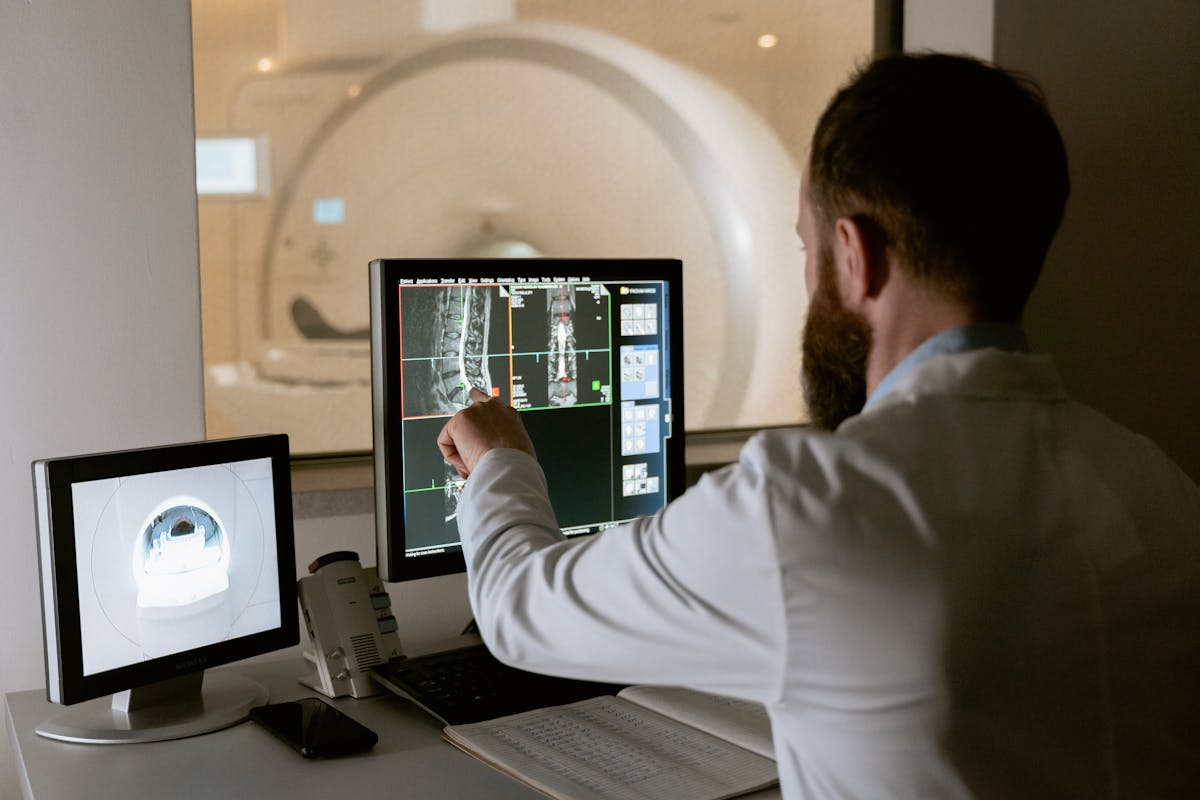
If you are travelling to India for surgery or cancer care, the hospital you pick matters as much as the treatment itself. Here is how to read JCI and NABH accreditation, what to verify before you book a flight, and the warning signs that should make you slow down.
Choosing where to be treated is one of the hardest decisions an international patient makes. You are comparing hospitals in a country you have likely never visited, often while dealing with a serious diagnosis and a deadline. The good news: India has a large, well-regulated set of tier-1 hospitals, and there are concrete things you can check before you commit. This guide walks through accreditation (JCI vs NABH), what to verify, and the red flags that should make you pause.
Start with accreditation — but know what it actually means
Accreditation is a third-party stamp that a hospital meets defined standards for patient safety, infection control, clinical processes, and record-keeping. For international patients it is the single most useful filter, because you cannot inspect the operating theatre yourself.
JCI (Joint Commission International)
JCI is the international arm of the body that accredits hospitals in the United States. It is the global gold standard and is intentionally hard to earn — surveyors review hundreds of measurable standards covering medication safety, surgical protocols, infection prevention, and patient rights, then re-survey every three years. A JCI-accredited hospital in India is held to broadly the same patient-safety bar as a US hospital.
The trade-off: JCI is expensive to maintain, so relatively few Indian hospitals hold it. If you restrict yourself to JCI only, you will exclude many excellent centres.
NABH (National Accreditation Board for Hospitals and Healthcare Providers)
NABH is India's national accreditation system, run under the Quality Council of India, and it is rigorous in its own right — its standards are themselves accredited by ISQua, the international body that "accredits the accreditors." A full NABH accreditation is a strong signal of quality and is the practical benchmark most reputable Indian hospitals meet.
How to use the two together
A simple way to think about it: JCI is a global best-in-class signal; full NABH is the dependable baseline you should not go below. Many of India's top oncology, transplant, and cardiac centres hold one or both. Do not treat "NABH" as second-rate — but do confirm it is full accreditation, not "entry-level" or "pre-accreditation," which are lower tiers. Always ask for the certificate and check the validity dates; accreditation can lapse.
What to verify before you book anything
Accreditation tells you about the building and its systems. It does not tell you whether the right surgeon will do your specific procedure. Verify the following.
The surgeon, not just the hospital
The named consultant matters more than the brand on the gate. Ask for:
- The specific surgeon who will perform your procedure, by name.
- Their qualifications, years in practice, and how many of your exact procedure they do per year. A surgeon doing 200+ knee replacements a year is in a different category from one doing 20.
- Whether that surgeon — not a junior colleague — will operate. Get this in writing.
For cancer, ask whether your case will go through a multidisciplinary tumour board (medical, surgical, and radiation oncologists reviewing together). For transplants, ask about the centre's annual transplant volume and one-year survival rate.
A written, itemised quote
A trustworthy hospital or facilitator gives you a written estimate that breaks down surgeon fees, hospital stay, implants or drugs, ICU, diagnostics, and an allowance for complications. Vague single-number quotes are a warning sign (more on that below).
As a reality check, here are indicative all-inclusive ranges in India (clearly approximate — your actual quote depends on city, hospital, your medical condition, and implant brand):
- Total knee replacement: roughly USD 4,500–7,000
- Total hip replacement: roughly USD 5,000–8,000
- Spinal fusion, single level: roughly USD 5,500–10,000
- Breast cancer surgery plus chemotherapy: from roughly USD 5,500
- Bone marrow transplant: from roughly USD 22,000
These are typically 60–80% lower than equivalent care in the US or UK, using the same implant brands (DePuy, Stryker, Zimmer Biomet, Smith & Nephew) and the same internationally certified drugs. If a quote is dramatically below these ranges, ask exactly what has been left out.
Implants, drugs, and protocols
For orthopaedic and cardiac work, ask for the brand and model of the implant or stent and confirm it carries FDA (US) or CE (Europe) certification. For cancer, confirm the centre follows recognised international guidelines — NCCN, ESMO, or ASCO. Reputable centres state this without hesitation.
A second opinion before you fly
Get an independent medical opinion on the proposed treatment plan before you commit to travel. A good plan should survive a second set of eyes. If two senior specialists agree on the approach, you can travel with far more confidence.
The practical logistics
Confirm the boring-but-critical details in advance: whether the hospital handles medical-visa invitation letters, whether interpreters are available in your language, the estimated total length of stay (including recovery and follow-up), and how post-treatment follow-up works once you are home.
Red flags that should make you slow down
Most international patients have a good experience in India. The bad experiences tend to share warning signs:
- Pressure to decide immediately. "This price is only good today" is a sales tactic, not medicine. Serious treatment decisions deserve time.
- No named surgeon, or a refusal to confirm who operates. If they will not put it in writing, assume the answer is "whoever is free."
- A single lump-sum quote with no breakdown. You cannot tell what is included, and "extras" tend to appear after admission.
- A price that seems too good to be true. Quality implants and senior surgeons cost what they cost. Suspiciously cheap usually means an older implant, a junior surgeon, or hidden charges.
- Reluctance to share the accreditation certificate or vagueness about JCI/NABH status.
- No interpreter or in-language coordinator for a hospital that markets to international patients.
- Communication only through an unnamed "agent" who will not connect you directly to the hospital or doctor.
- No plan for complications. Ask what happens — and who pays — if recovery takes longer than expected. A straight answer is itself a good sign.
A simple checklist
Before you book a flight, you should be able to tick all of these: full NABH (and ideally JCI) accreditation confirmed with a valid certificate; named surgeon with relevant volume in your procedure; written itemised quote; implant brand or treatment protocol confirmed; an independent second opinion obtained; visa, language, and follow-up logistics clarified. If any box is blank, that is your next question — not a reason to rush.
Where Livance fits in
Doing all of this yourself, across hospitals you cannot visit, is a lot. That is the part we help with. Livance is a medical travel facilitator: we review your reports, give you a free, honest medical opinion from senior specialists, and match you to JCI- and NABH-accredited hospitals with the right surgeon for your case — with itemised quotes, no pressure, and coordinators who speak your language.
If you want a second opinion or a clear, written cost estimate before you decide anything, send us your reports on WhatsApp or request a free consultation. We will tell you honestly whether travelling to India makes sense for your situation — even when the answer is that it does not.
Ready to Start Your Medical Journey?
Get personalised treatment recommendations and cost estimates from our expert team. Contact us today for a free consultation.
Get Started